

Well Remediation
Rehabilitation When Your Well Underperforms
Well remediation — sometimes called rehabilitation or development work — means restoring a well that still has life left in it. Over time, screens can plug with mineral scale or biological growth, sand can migrate into the pump, or the aquifer connection can weaken. The right intervention can improve yield, cut sediment, and delay or avoid drilling a replacement well.
Klutz Well Drilling works with homeowners, farms, and businesses across North Manchester and surrounding Indiana communities. We combine field experience with straight talk: we pursue remediation when it makes sense and recommend a new well when it does not.
Discuss Your Well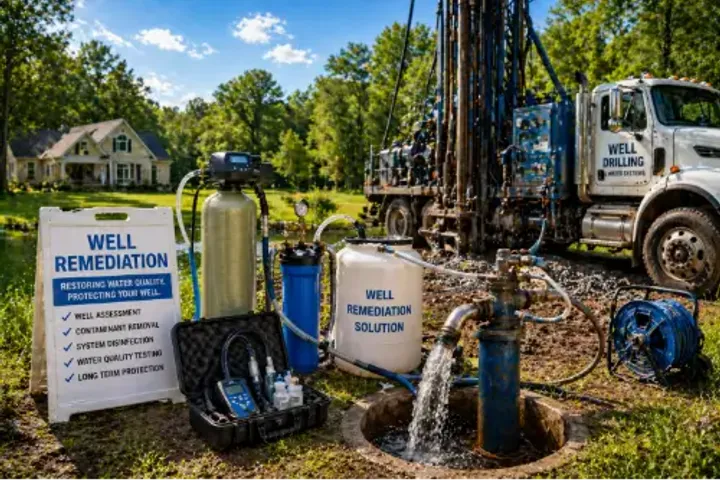
When Remediation May Be Worth Exploring
- Water production has slowly declined over seasons or years with the same pump
- Sand, silt, or grit shows up at taps or shortens pump life
- The pump labors, air binds, or you lose prime more often than it used to
- Taste, odor, or color changed after long idle periods or known surface influence
- You are preparing to sell or refinance and need the well documented or improved
Why Consider Remediation?
Diagnose Before You Drill
A failing well is not always a lost cause. We investigate whether the problem is the aquifer, the screen, the pump setting, or fouling — so you do not pay for a new well when rehabilitation can help.
Restore Flow and Stability
Targeted rehabilitation can improve specific capacity, reduce sand production, or clear enough buildup that the pump can operate in its designed range again.
Address Water Quality Symptoms
Biofilm, mineral scale, and debris in the bore can affect clarity and taste. Remediation is sometimes paired with disinfection or treatment once the well itself is in better shape.
Field-Proven Methods
Depending on the diagnosis, options may include mechanical cleaning, surging, chemical treatment where appropriate, and development work — always matched to your well construction and regulations.
How We Approach It
Review History
We discuss when the well was drilled, past yields, pump replacements, and what changed — sudden sand, gradual pressure loss, or recurring service calls all tell part of the story.
Inspect and Assess
A hands-on look at the well head, pumping setup, and available records builds the picture. We may recommend a formal well inspection or testing before committing to a remediation plan.
Recommend a Plan
If rehabilitation is viable, we outline the approach, risks, and realistic outcomes. If the casing, screen, or aquifer is beyond economical repair, we will say so and discuss replacement.
Execute and Verify
We carry out the agreed work, then check pumping performance and water appearance so you know whether goals were met — and what maintenance or retesting should follow.
Service Area
We serve North Manchester, Wabash, Warsaw, Huntington, Columbia City, Fort Wayne, and the surrounding Indiana communities.
View Full Service AreaRelated Services
Start with a well inspection when the picture is unclear. Bacterial issues may call for well chlorination. If you need a new bore, well drilling and water treatment planning go hand in hand.
Tell Us What You Are Seeing
Call (260) 571-7380 or contact us online. The more detail you share about pressure, sand, and service history, the faster we can suggest sensible next steps.
Contact Us